Six Levers for Long-Term Decarbonisation
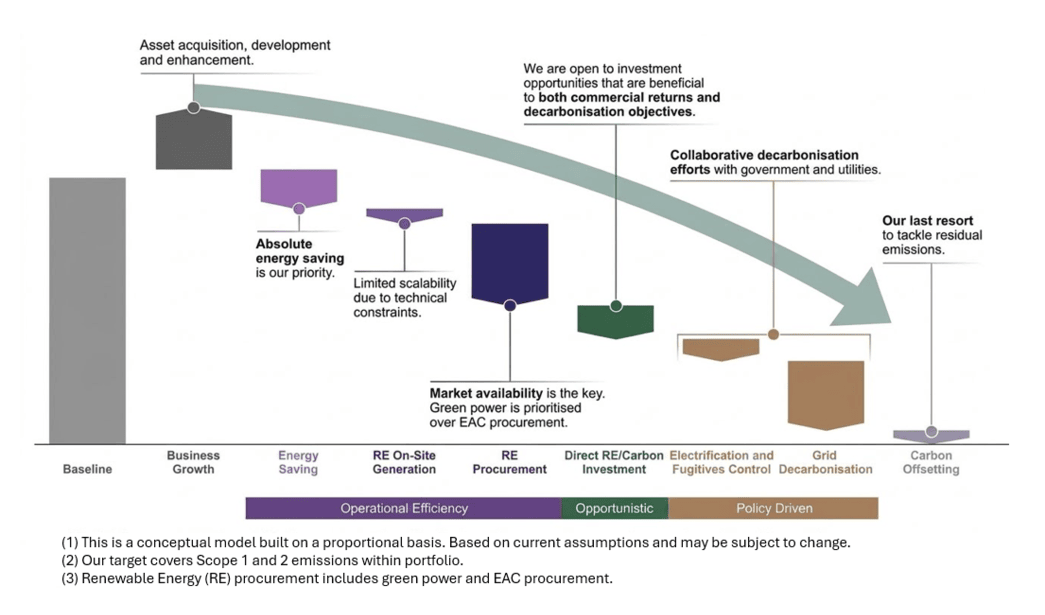
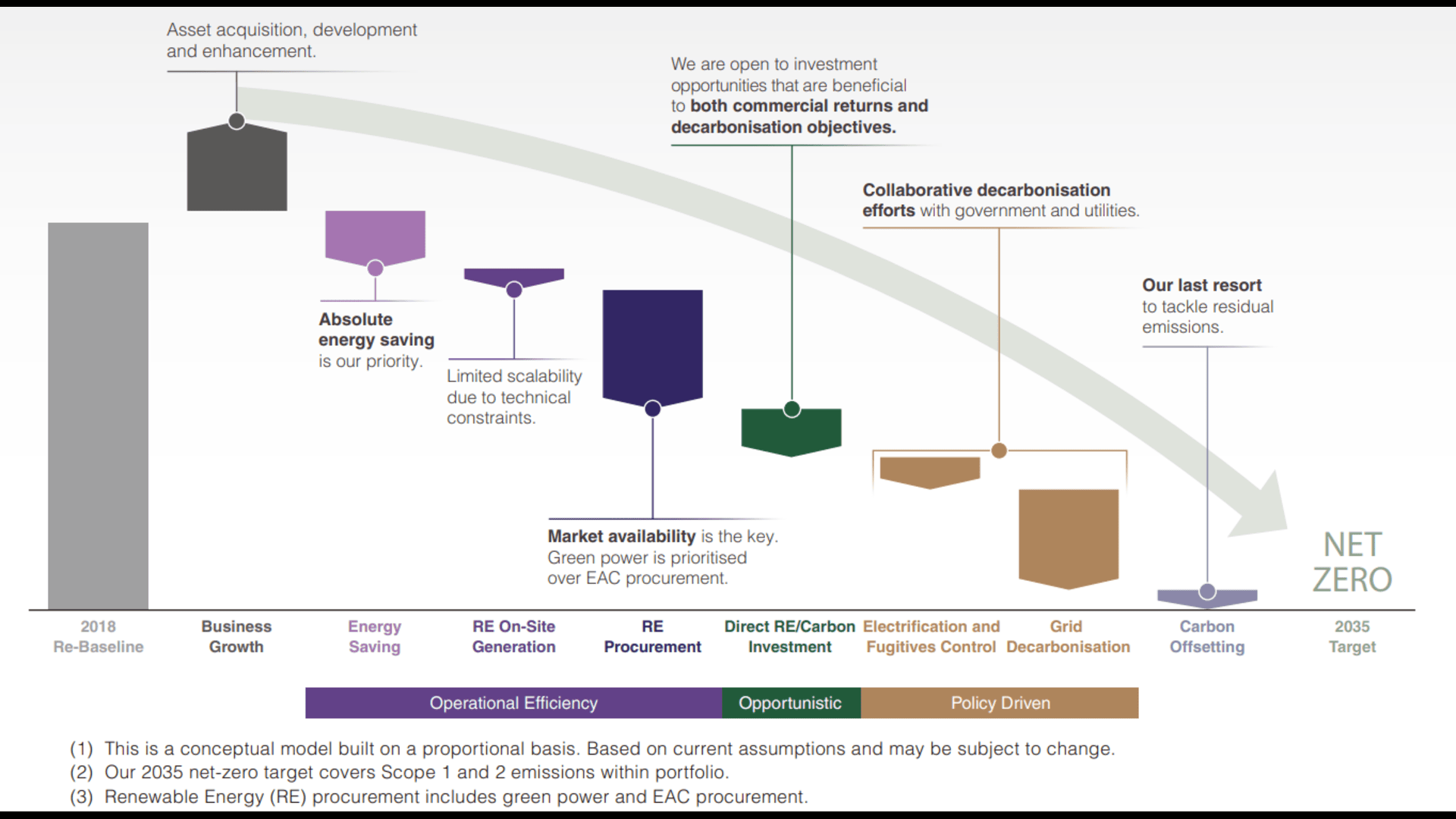
Our decarbonisation strategy is built on six core levers that allow us to navigate operational realities, regulatory diversity and capital constraints across jurisdictions:
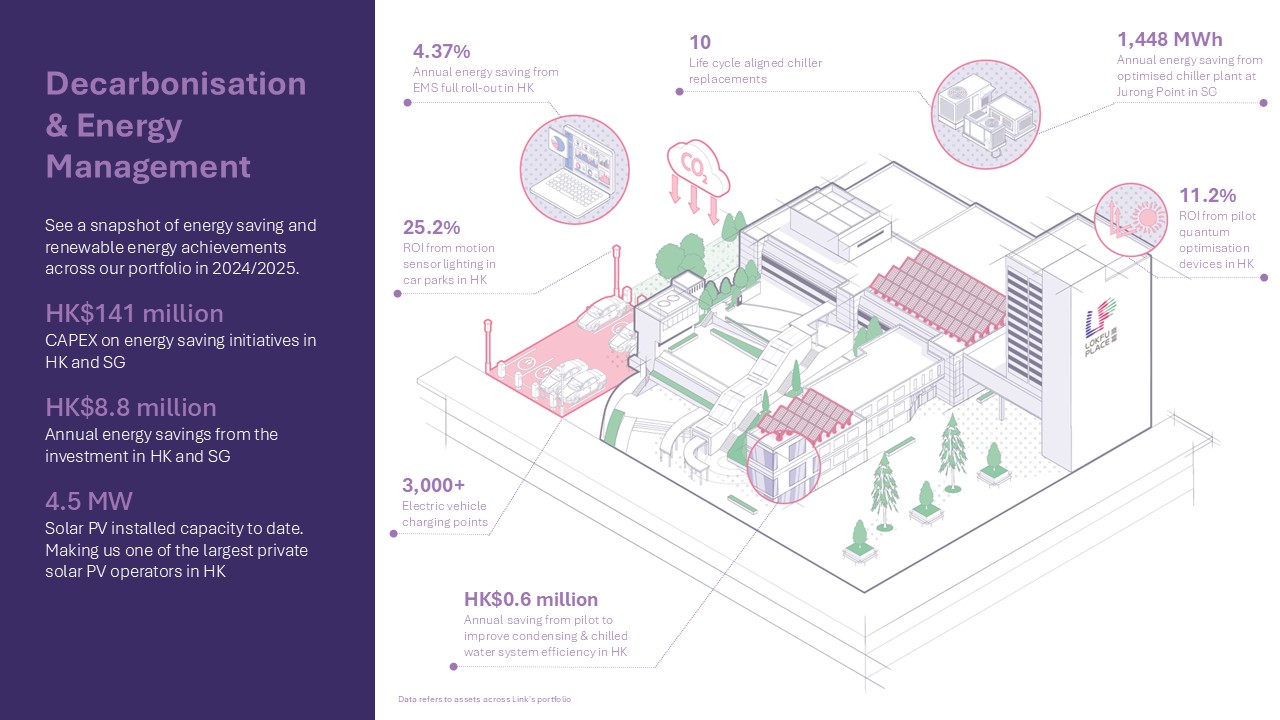
This is the foundation. From HVAC optimisation and chiller upgrades to LED retrofits and control system automation, we continue to drive down energy intensity at scale. Our EMS deployment programme, layered on 15 years of energy optimisation work, gives us a cost-efficient, high-control starting point.
Learn more
We are scaling rooftop solar PV across our portfolio, with priority given to assets offering viable roof space and structural suitability. We are also exploring lightweight and flexible solar systems that reduce load while preserving rooftop usability.
In jurisdictions where on-site generation is not viable, we are expanding our use of RECs and green electricity contracts. Our decisions here are influenced by both supplier readiness and the projected pace of grid decarbonisation, which varies widely across APAC markets.
We are open to exploring investment opportunities in carbon sinks and removals, such as building-integrated insets and nature-based solutions that can be tied to our assets. Over the long term, we believe these will form part of our future carbon balance sheet.
Fuel mix optimisation addresses decarbonisation through two key approaches: adapting to regional grid transition timelines; and reshaping energy demand via electrification. By incorporating these considerations into our market expansion and electricity procurement choices, we ensure emissions reduction even when policy-driven improvements are slow.
Offsets are only considered for genuinely hard-to-abate emissions. We favour credits tied to emission avoidance (e.g. organic waste diversion or methane capture) and continue to explore self-generated credits within our own operations. We do not rely on offsets to meet near-term targets and view them as a backstop, not a strategy.


 Lagging Behind
 Not Commenced